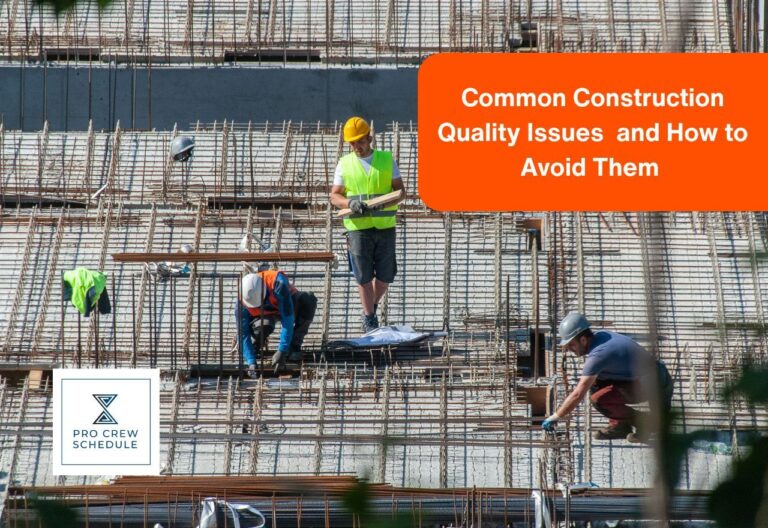

Mistakes are common in all industries, and the construction industry is no exception. Owing to the myriad of complicated details involved, this sector bears more mistakes than others. No two projects are alike; hence, each construction job is at risk of its own set of errors. There are inevitable mistakes in construction, but a great deal can still be done to prevent the most frequent mistakes from occurring on-site.
If you know the common mistakes on-site, you are better equipped to avoid them. Hence, we will discuss the most common errors and the ways to prevent them.

1. Hiring an Unqualified Contractor
Without a doubt, the situation could worsen if you choose an unqualified, irresponsible contractor. No matter how big or small the project, stories of selecting the wrong contractor can be heard throughout the construction industry. A competent contractor can complete the job on time and within the specified budget. Thus, contractor selection should be done cautiously. In this manner, you can check whether it is a genuine company and whether its project types align with your needs.
Acquire their licenses and the necessary documentation, and review what previous customers have said about their work; this way, you will have a clear idea of what to expect before any contractual agreement is signed with the contractor. You must also verify the contractor’s bonding or insurance. In the event of any mishap, the contractor’s inability to perform their duties can be a major problem if they are not insured. During construction, insurance protects the property, while bonding protects it after completion. In the case of a contractor with insurance, they will be able to cover claims arising from an injured worker or any other related issue at the site.
2. Not Getting Multiple Estimates
Getting the first estimate might seem too easy and could end up being the only one, due to the excitement of launching a project. The contracting company may be straightforward with you and produce an estimate that you find quite reasonable. The first phase of every project is marked by optimism, but beneath it lie risks. If you have already selected the first estimate, you may overlook some details; however, when unanticipated costs arise during the project, you will face overruns and delays. The projection attributed to the first quote can be lessened by wishful thinking.
By considering multiple estimates, you will quickly find the best mid-range cost for your project. It is not enough to focus solely on the estimated price. The contractor’s reputation, experience, and the warranty offered for the job must also be considered. In this way, you will be able to come up with the most suitable estimate for your requirements from multiple options, not just one.
3. Poor Communication
Among the reasons for project delays is the lack of communication between the involved parties. A project client may think they are inquiring too much, but still, asking for a clearer understanding is always necessary. If the matter is unclear to you, it is wise to find someone who can help clarify it. Communication problems can also result in performing the wrong tasks, leading to costly delays.
It is the project manager’s duty to establish a clear communication channel. Since the owner will not always be present, the project manager should also leverage construction crew management software to provide project stakeholders with real-time updates. This will not only help avoid costly delays but will also keep the project on schedule, as no valuable time will be wasted waiting for responses.
4. Not Acquiring Necessary Permits
Lacking proper permits can lead to local authorities penalizing you and shutting down your project, which can, in turn, alter the project’s budget and timeline. It is advisable to check all necessary permits for your project before taking any action. Construction licenses take considerable time and money to process; therefore, you should start the application process early. Note that insurance does not cover project errors when a building lacks permits. Also, you need to know who is responsible for your licenses. Sometimes contractors will pull their licenses, and at other times subcontractors will come equipped with their permits. In other cases, the client is responsible for acquiring permits.
Most city regulations require you to display your permits publicly, thus allowing inspectors to verify the work.
5. Rushing the Pre-construction Process
Early construction planning occurs during the preconstruction stage. Preconstruction may seem like a waste of time, but ignoring it can have serious repercussions in the later phases. The owner assesses a project’s viability during the preconstruction stage, which includes design development and construction documents. During the design phase, the project team creates cost estimates, a general timeline, risk management plans, and procurement techniques. Costly errors may occur during actual construction if this phase is poorly handled.

6. No Set Completion Dates
There are only a few instances in which it is permissible to extend the deadlines for completing the work. Such instances include bad weather and natural disasters, but they are rare. Therefore, the project may be delayed only in exceptional cases by weeks or even months beyond the planned completion date. Contractors who keep extending completion dates are actually setting themselves up for trouble. Clients who try to complete the project on time often resort to financial incentives for contractors they deem reliable. Also, when contractors take longer than expected to finish a project, they may have to pay a certain amount for each day the finish date is extended.
A good contractor allows extra time to ensure the project is finished on schedule, which can save you a lot of stress.
7. Forgetting the Tiny Details
All of us have moments where we forget things because it is our nature. There can also be occasions when we drop something or make a mistake. However, when forgetting becomes common on the job site, it can disrupt project operations. Proper equipment-handling systems should be established through construction inventory management software, along with continuous training and monitoring to ensure nothing is overlooked on-site. Neglecting equipment management on a project can lead to unexpected costs. This explains the necessity of adhering to a strict maintenance schedule for the equipment. This, in turn, results in substantial savings of time and money.
8. Not Considering Contingencies
There are numerous occasions when construction problems catch contractors by surprise, which is always disappointing for all stakeholders involved. Construction risks are always present, and it is wise to plan for them rather than be caught off guard. If you are doing a home renovation, it is good to know what the contractor has done to prepare for handling unexpected situations.
Preparing for construction hiccups can save great stress, time, and money. We should always account for contingencies in a project’s budget. A typical cost estimate reserves 7%-10% to cover risks, regardless of the project’s scale. How we deal with risks is a factor that determines whether a project is successful.
Best Practices for Best Construction Quality
Even when we apply the most effective systems at the site, mistakes in construction may sometimes occur. The foremost thing you need to do is determine the steps to take to avoid exacerbating the problems at the site. Use the following tips to address your construction errors.
1. Forget the Blame Game
When a mistake has been identified, listen to your contractor’s explanation. It is a good practice not to accuse anyone on site, as this will certainly slow down the project. Even though it might be difficult to stay calm and avoid blaming others, it is important to realise that these mistakes will most likely delay the project and increase your costs. Try to discuss the matter and find a solution together. Your contractor will be willing to correct the mistake because he knows you have his back. Rethink the project budget and timeline, and determine how to achieve the objective and proceed.
2. Align with Your Team First
There might be several on-site mistakes. These could be due to the use of substandard products, wrong installations, or the use of undesired materials. However, you would not want to operate on assumptions; rather, you should talk to your construction team to find the root cause of the mistake. You cannot correct an error you have no context for.
One way is to document the error and inform all the involved people. The next step should be to speak with your team. It may be an uncomfortable discussion with your workers, but it is your best opportunity to resolve the problems. Remember, teamwork is everything in a construction project.
3. Stop Recurring Mistakes
Once the mistake has been spotted, acknowledged, and corrected, the next best step is to put preventive measures in place to avoid its recurrence. Evaluate your company’s practices and identify what you need to streamline to improve how you handle construction mistakes. Implementing standardized workflows supported by construction crew management software can help enforce accountability within your team. Many construction mistakes are almost inevitable, but having a good system in place enables you to manage errors better.
Key Takeaway
Workers are more likely to make mistakes and become misinformed about the tasks they need to do when communication gaps occur. Furthermore, employees risk creating an even worse mess than they started if they are not informed about mistakes that have already happened. As a result, utilising technology to enhance field and office communication is essential. Using mobile devices, field collaboration software like Pro Crew Schedule enables teams to stay up to date on workflow adjustments and updates in real time. To reduce change orders during construction, these technologies can help improve design collaboration at the start of a project.